
What are the three main portable storage business models?
Most companies earn money in three ways: renting, selling and modifying. Each one has a different cash profile. Many operators run a mix, because the models support each other.
| Model | How you earn | Cash timing | Main risk |
|---|---|---|---|
| Rent | Monthly fee plus delivery and pickup | Slow, repeating | Idle containers cost money |
| Sell | Markup over purchase price | Fast, one time | Must keep restocking |
| Modify | Labor and parts on top of a container | Per job | Needs skilled labor and quality control |
A fourth path, leasing containers to other operators, exists too. This post focuses on the three that serve end customers.
How does renting work, and what does it cost to run?
Renting means you keep ownership and charge a monthly fee. Each container earns again and again. The catch is that you carry the cost of the container, the yard, the truck and the insurance whether it is rented or not.
One published guide from JIM, a business blog, gives these estimates. Treat them as one source’s view, not an industry standard:
- A 20-foot container rents for about $100 to $150 per month.
- A 40-foot container rents for about $175 to $250 per month.
- Delivery fees run about $150 to $300 depending on distance.
- Net margin for a lean operator is about 15 to 25 percent after truck payments, insurance, fuel and yard lease.
Prices vary by market, size, condition and season. Your own rates will differ.
The key number is utilization: the share of your fleet on rent. JIM says to keep rentals above 70 percent to protect net margin. It also says payback on inventory is about 18 to 30 months at that level.
Here is simple math to show why. Example estimate, not a quote: a 20-foot container at $125 per month, rented 70 percent of the time, earns about $1,050 per year before delivery fees and costs ($125 x 12 months x 0.70). At 50 percent it earns $750. Every point of utilization matters. The pricing guide goes deeper.
How does selling work?
Selling means you buy containers and resell them at a markup. You get paid once, and you move on to the next sale. It needs less yard time than renting, but you must keep restocking.
JIM says a standard markup on sales is 25 to 35 percent over your purchase price. That figure is a guide, not a rule. Wholesale cost, freight and local competition all move it.
Selling also teaches you the product. You learn which grades sell, such as a one-trip container or a wind and water tight unit. Container grades are trade terms, not a single legal standard, so define them in writing for every buyer. The wholesale buying guide explains what to check before you buy.
How do modifications fit in?
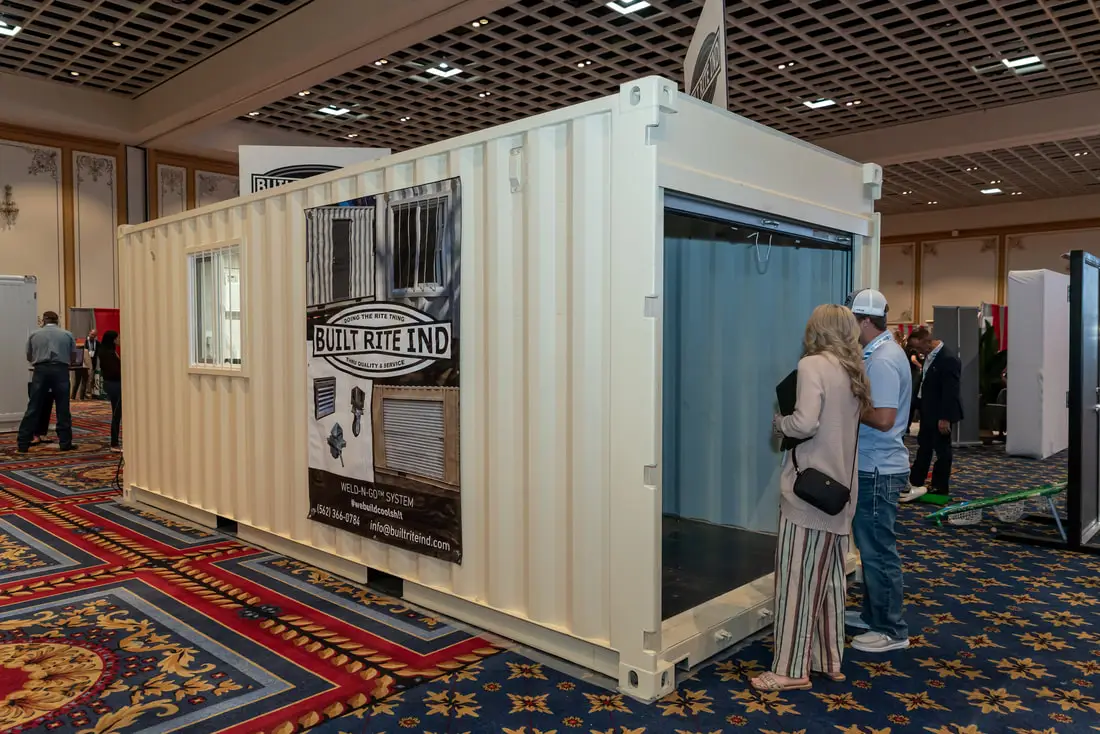
Modifications raise the value of a container by adding work: doors, windows, lock boxes, shelving, power or insulation. JIM estimates 40 to 60 percent gross margin on custom labor, and says it lifts the average ticket.
A container modification also changes your risk. You need skilled workers, tools, shop space and a way to test your work. Mistakes cost more than with a plain box. Cutting steel can also affect the container’s structure, so use qualified people and check the modifications guide.
Modified units can be sold or rented. A fitted-out unit may rent for more than a plain one, but prices vary, so test your market first.
What should a small operator do first?
Start narrow. Pick one market, one container size and one way to earn. Then add more once you know your numbers.
- Study your local demand. Who rents containers near you, and at what rate?
- Start with a small fleet. JIM suggests five to ten wind and water tight containers rather than cheaper as-is units, and a lean launch budget of $35,000 to $90,000. That is its estimate; your costs may differ.
- Decide how you will deliver. A truck, a contract hauler or a partner all work.
- Track utilization from day one.
- Add sales or modifications when the yard and the schedule can handle them.
JIM also advises growing only when about 80 percent of your containers are consistently rented. That is a rule of thumb from one source. Use it as a check, not a law.
Regulatory rules apply to delivery trucks and drivers. Check your state and local rules, and talk to your insurance agent and a tax professional about your setup.
Where can operators learn from peers?
Peers can show you what works in your market. The National Portable Storage Association (NPSA) is a trade association for companies that rent, sell or lease portable storage containers, trailers and mobile offices, and for the suppliers who serve them.
You can learn from other operators in several places:
- The training video library for members.
- The events page, which lists upcoming and past meetings. The 2027 Conference & Trade Show runs April 4-6, 2027 at Paris Las Vegas.
- The supplier directory, which lists 2026 exhibitors and sponsors by product category.
Next step
Ready to compare notes with other operators? See the next NPSA meeting dates on the events page.